
Cap Press vs Flat Press for DTF: When Each Works
A flat press can handle the front panel of a structured cap in low volume, but a dedicated cap press produces consistent results across the full crown and is the only viable option for unstructured styles.
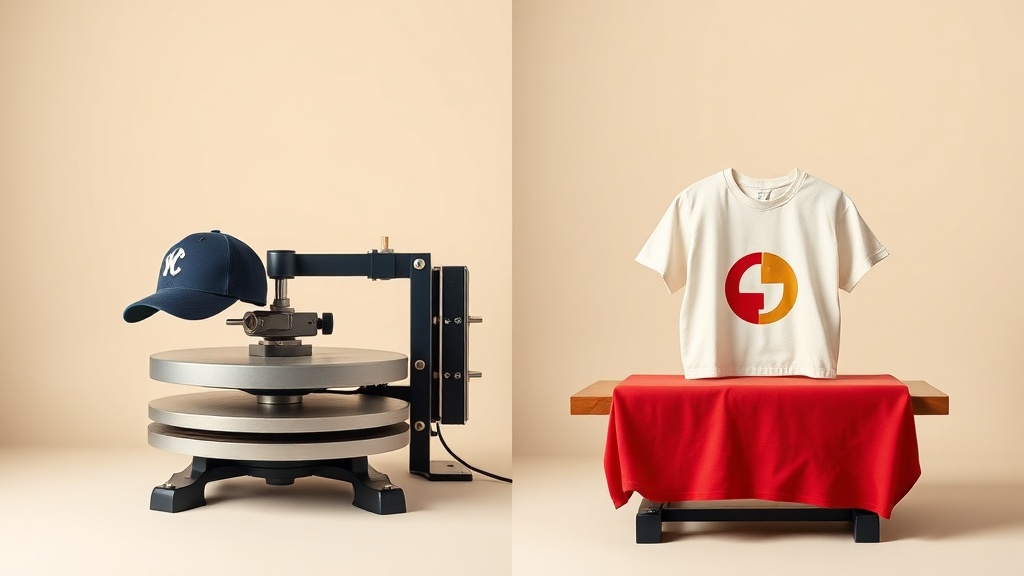
The Core Mechanical Difference
A flat press applies even pressure across a flat surface. The front panel of a structured cap has some flat area, but it curves at the edges and is backed by the rounded interior of the crown. The result is inconsistent contact and inconsistent adhesion when you use a flat platen.
A cap press places a curved lower platen inside the crown. The upper platen presses down and the curved lower platen pushes back evenly from below, filling the contours of the crown and creating full-surface contact.
When a Flat Press Is Acceptable
Structured 5-panel caps with very stiff front panels, like the Richardson 112, have enough flat area in the center of the panel to accept a small transfer on a flat press. Keep the design under 3.5 inches wide to stay within the reliably flat zone.
Place a folded silicone pad or thin foam insert inside the cap to create an even backing surface. This improves contact but does not fully replace a curved lower platen, so expect edge adhesion to be slightly weaker.
When You Need a Cap Press
Unstructured caps, also called dad hats or low-profile 6-panel styles, have no rigid front panel. Pressing an unstructured cap on a flat platen produces wrinkled film and partial adhesion across most of the print area. A curved platen is not optional here.
If you are pressing more than a handful of caps per week, a cap press pays for itself in reduced rework alone. The time spent repositioning and re-pressing failures on a flat press exceeds the cost of the right equipment within a few months.
What to Look for in a Cap Press
Entry-level cap presses run $150-$300 and handle most structured cap styles adequately. The critical features are an adjustable lower platen with multiple radius settings, a digital temperature display accurate to within 5°F, and a countdown timer with an audible alarm.
Mid-range presses around $300-$500 add pneumatic pressure and interchangeable platens. If you plan to run multiple cap styles with different crown depths, interchangeable platens are worth the investment over fighting with a single fixed radius.
- Adjustable curved lower platen covering multiple crown radii
- Digital temperature display accurate within 5°F
- Countdown timer with audible alarm for production consistency
- Upper platen clearance sufficient for high-crown structured caps