
Cap Crown Types: Structured vs Unstructured
The crown type of a cap determines which pressing technique you can use, how much decoratable flat area you have, and whether a DTF transfer will bond consistently across the front panel or fight you at the seam lines.
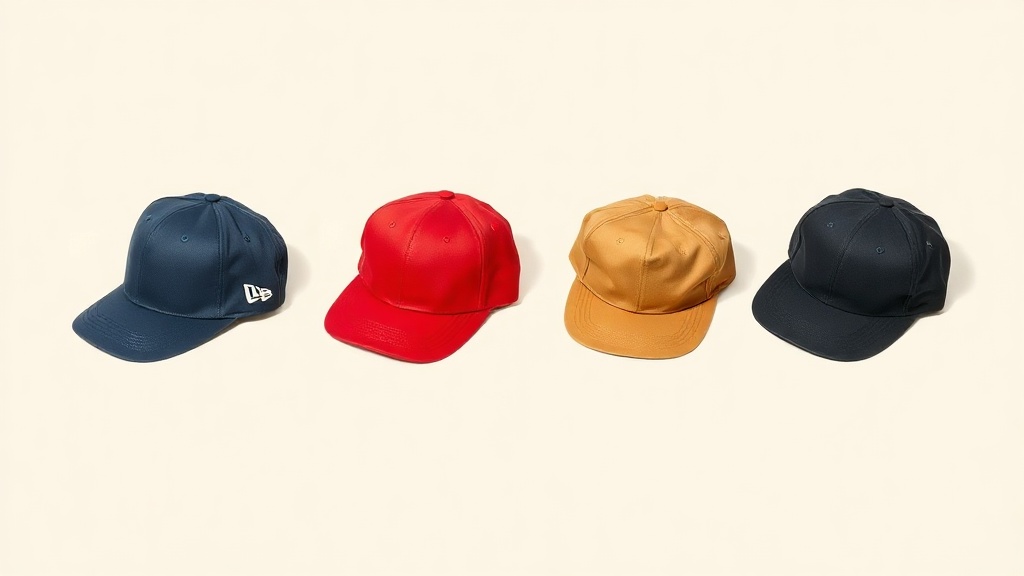
Structured vs Unstructured
Structured caps have a buckram or interfacing layer fused to the inside of the front panel. This stiffener holds the crown shape without a head inside it and creates a flat, firm surface for decoration. The Richardson 112, the most popular DTF cap blank, is a structured cap with a particularly flat, stiff front panel that sits nearly vertical when viewed from the side.
Unstructured caps, also called dad hats or soft-crown caps, have no stiffener. The front panel is soft fabric that only holds its shape when on a head. On a press table, the panel flops and curves in ways a flat platen cannot follow. Unstructured caps require a curved cap press lower platen for consistent DTF application.
Profile Heights
High-profile caps have a tall, upright crown and a wide flat front panel, which maximizes decoratable area. Standard embroidery and DTF designs fit easily in the 3-4 inch height of the front panel. Mid-profile caps sit lower and have a slightly curved front panel with a smaller flat zone. Low-profile caps are the flattest and most fitted and offer the smallest reliably flat decoration area.
For DTF, high-profile structured caps give you the most consistent results because the front panel is both flat and large. Mid-profile caps work well with a properly set cap press. Low-profile unstructured caps are the most difficult and should be test-pressed before committing to a production run.
5-Panel vs 6-Panel
A 5-panel cap has one solid front panel with no center seam running up the crown. This is the ideal layout for DTF because there is no seam bisecting the front panel to create pressure gaps under the platen. The Richardson 112 is a classic 5-panel design.
A 6-panel cap has a seam running vertically up the center of the front panel, dividing the decoration area into two sections. This seam creates a ridge under the platen that results in uneven pressure unless your cap press platen has a center groove or you use extra backing material at the seam.
Choosing the Right Cap for DTF
If you are new to cap decoration, start with a structured, high-profile, 5-panel cap. The Richardson 112 is the industry default for a reason: the flat front panel, the stiff buckram backing, and the 5-panel construction combine to create the easiest, most consistent DTF pressing experience available.
Once you are comfortable with structured 5-panel caps, expand to mid-profile styles. Save unstructured and low-profile caps for after you have invested in a quality cap press with an adjustable curved lower platen.