Comfort Colors Blanks: Garment-Dyed Heavyweight, Real Press Data
Comfort Colors built the pigment-washed aesthetic that half the boutique market is chasing. Here is what the 1717 actually needs at the press to keep that look through 60 washes.
- Ships in 24 Hours
- No Minimums
- Wash-Tested Guarantee
The 1717 and the five styles built around it.
From the anchor heavyweight tee to the garment-dyed fleece set, each card links to full color swatches, size data, and the specific DTF press parameters we use on our production floor.

Comfort Colors
Unisex Garment-Dyed Heavyweight T-Shirt
From $9.44
1717 · 6.1 oz garment-dyed ring-spun cotton
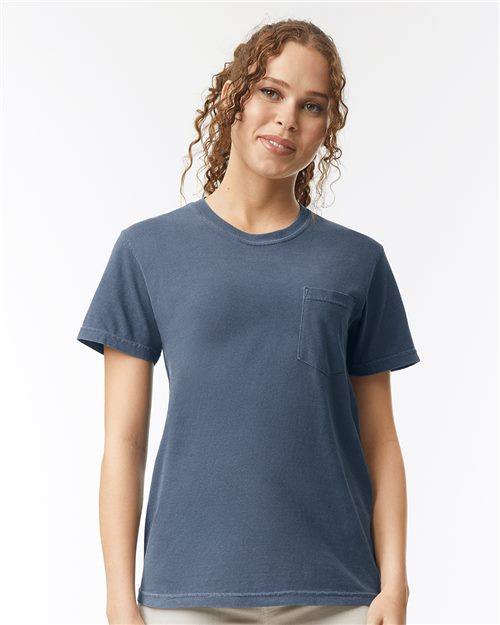
Comfort Colors
Unisex Garment-Dyed Heavyweight Pocket T-Shirt
From $10.22
6030 · 6.1 oz with chest pocket
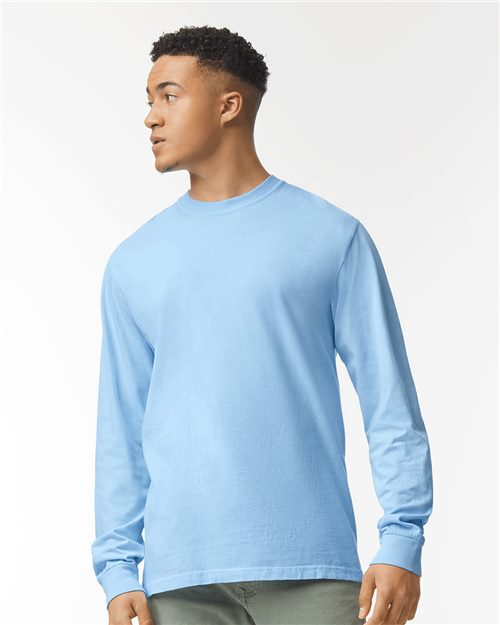
Comfort Colors
Unisex Garment-Dyed Heavyweight Long Sleeve T-Shirt
From $14.94
6014 · 6.1 oz long sleeve
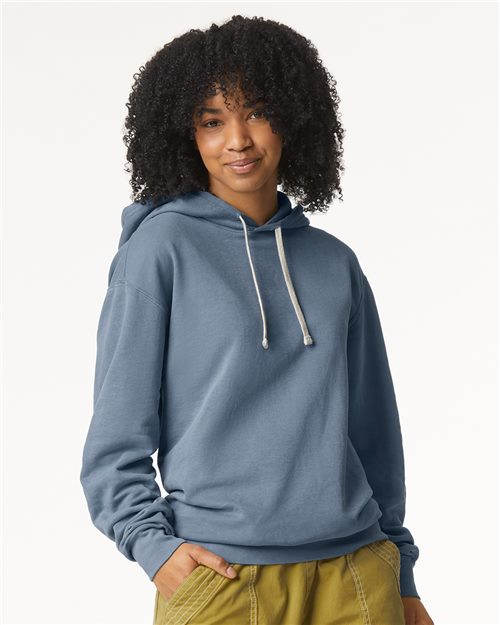
Comfort Colors
Unisex Garment-Dyed Lightweight Fleece Hooded Sweatshirt
From $25.23
1467 · 8.5 oz garment-dyed fleece hoodie
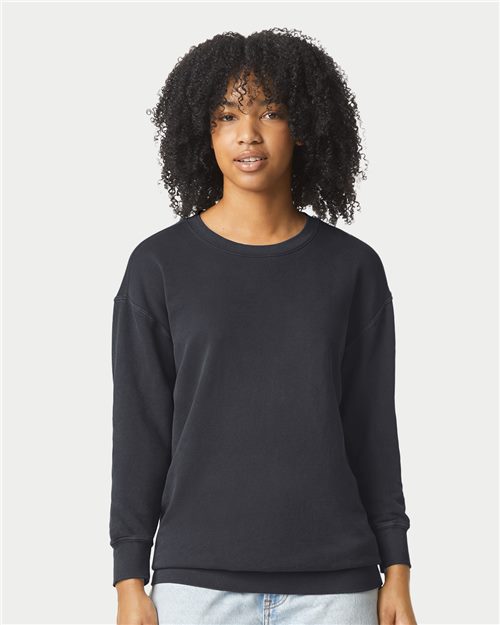
Comfort Colors
Unisex Garment-Dyed Lightweight Fleece Crewneck Sweatshirt
From $23.12
1466 · 8.5 oz garment-dyed fleece crewneck
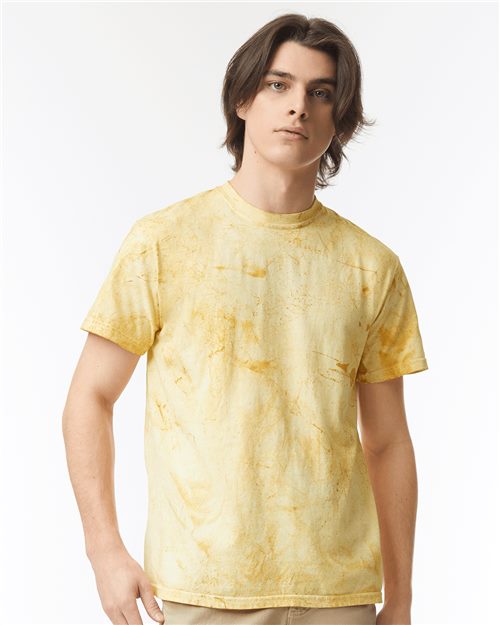
Comfort Colors
Unisex Colorblast™ Heavyweight T-Shirt
From $11.93
1745 · 6.0 oz two-tone colorblast
Short version, straight from the floor.
Comfort Colors 1717 is the heavyweight garment-dyed tee that defined the pigment-washed streetwear aesthetic for the past decade. At 6.1 oz of ring-spun cotton, it is heavier than a standard fashion tee, and the garment-dye process gives every shirt a slightly different shade even within the same color. That intentional variation is the point.
Pressing at 315 F on dark Comfort Colors colorways. Pepper, watermelon, blue jean, and the other saturated dark colorways have a pigment density that migrates at 315 F. Keep the press at 305 F, firm pressure, 10 to 12 seconds. If you get bleed, the issue is almost always excess heat on a dark shirt, not a transfer defect.
Promising a color match across a full size run without checking stock. Comfort Colors garment-dye means batch-to-batch variation within the same color. Identical color names from different dye batches can differ visibly side by side. Confirm stock levels before a run, especially on cult colors that sell out seasonally.
Ordering the 1717 for a corporate uniform program. The garment-dye variation that makes the 1717 desirable for boutique brands makes it unreliable for corporate programs requiring color uniformity across 200 shirts. Use Gildan, Port Authority, or Bella+Canvas for programs where everyone's shirt needs to match.
Forgetting to calibrate pressure for the 6.1 oz weight. The 1717 is heavier than most fashion tees and requires slightly more platen pressure than a 4.2 oz Bella+Canvas. Shops that run a calibrated press for one fabric without re-calibrating for the other will get inconsistent transfer adhesion. Press one sample, check peel, adjust, then run production.
A production-floor definition, not a spec sheet.
Comfort Colors 1717 is the heavyweight garment-dyed tee that defined the pigment-washed streetwear aesthetic for the past decade. At 6.1 oz of ring-spun cotton, it is heavier than a standard fashion tee, and the garment-dye process gives every shirt a slightly different shade even within the same color. That intentional variation is the point. Buyers who want uniform color across a program should look elsewhere. Buyers who want a lived-in vintage feel from the first wash should start here.
DTF on Comfort Colors requires attention to two variables. First: temperature. The garment-dyed finish on the 1717 has a dye that can migrate under excess heat. Press at 305 F for a standard 10 to 12 second dwell with firm pressure. Do not exceed 315 F on dark colorways (pepper, watermelon, blue jean) because the dye will migrate into the white ink layer. Second: the fabric weight means the transfer takes slightly more pressure than a 4.2 oz fashion tee. Calibrate before your first production run.
The 1717 color palette is the brand's most valuable asset. Comfort Colors seasonally releases and retires colorways, so some of the cult-favorite colors (e.g., blossom, melon, seafoam) can be back-ordered during peak season. The available index on this hub reflects current stock. Confirm all sizes are available in your target color before you commit a production run to that colorway.
The garment-dyed fleece (1466 crewneck, 1467 hoodie) extends the aesthetic into a coordinated set. Same color palette, same garment-dye process, same vintage character. For brand founders doing a full capsule that reads cohesive, the fleece pairs with the 1717 in the same colorway. Order the tee and the hoodie in the same dye batch number when possible to minimize color variation between pieces.
The roles and jobs this hub actually serves.
- Boutique apparel brand founders whose customer aesthetic is vintage, worn-in, or lived-in (Journey 1).
- School and event coordinators printing spirit wear in seasonal colorways (Journey 9).
- Streetwear brands producing pigment-washed drops where the garment is half the product.
- Etsy sellers selling vintage-look custom tees where the Comfort Colors name carries purchase intent.
- Print shops serving a customer base that specifies 1717 by name and knows the color palette.
- Restaurant and hospitality programs going for an upscale casual aesthetic versus a corporate uniform look.
Every hub connects to real product decisions.
These are the specific transfers, blanks, methods, and programs we would put next to this hub in a real production conversation. Not a link farm. Every row is a pairing we actually recommend.
Best-with Comfort Colors SKUs
- 1717 Heavyweight Tee
The anchor. 6.1 oz garment-dyed, available in 60+ colors.
- 1467 Garment-Dyed Hoodie
8.5 oz fleece hoodie in the same color palette as the 1717.
- 6014 Long Sleeve
6.1 oz long sleeve. Matches the 1717 for four-season sets.
- 1745 Colorblast
Two-tone pigment effect. The premium tier above the 1717.
Best-with decoration
- DTF Transfers
The default method. Full-color on garment-dyed cotton at the right temp.
- DTF Press Settings Guide
Temp, dwell, and pressure calibrated for Comfort Colors fabrics.
- Gang Sheets
Multi-size transfer sheets for capsule drops across the 1717 and fleece.
- Luxury Branding Package
Neck-tag DTF and foil finishes for boutique Comfort Colors programs.
The 1717 ships with your DTF transfer on one order.
No account required. No minimums. Volume tiers auto-apply at checkout.
- Ships in 24 Hours
- No Minimums
- Wash-Tested Guarantee
Comfort Colors mistakes that cost money.
Pressing at 315 F on dark Comfort Colors colorways.
Pepper, watermelon, blue jean, and the other saturated dark colorways have a pigment density that migrates at 315 F. Keep the press at 305 F, firm pressure, 10 to 12 seconds. If you get bleed, the issue is almost always excess heat on a dark shirt, not a transfer defect.
Promising a color match across a full size run without checking stock.
Comfort Colors garment-dye means batch-to-batch variation within the same color. Identical color names from different dye batches can differ visibly side by side. Confirm stock levels before a run, especially on cult colors that sell out seasonally.
Ordering the 1717 for a corporate uniform program.
The garment-dye variation that makes the 1717 desirable for boutique brands makes it unreliable for corporate programs requiring color uniformity across 200 shirts. Use Gildan, Port Authority, or Bella+Canvas for programs where everyone's shirt needs to match.
Forgetting to calibrate pressure for the 6.1 oz weight.
The 1717 is heavier than most fashion tees and requires slightly more platen pressure than a 4.2 oz Bella+Canvas. Shops that run a calibrated press for one fabric without re-calibrating for the other will get inconsistent transfer adhesion. Press one sample, check peel, adjust, then run production.
The reading before you place the order.
Comfort Colors 1717 Buyer Guide
Colorways, seasonal availability, and DTF settings we actually use.
Garment-Dyed Fleece Guide
1466 crewneck and 1467 hoodie in context with the 1717 tee.
DTF on Heavyweight Cotton
How the 6.1 oz weight changes press calibration vs. fashion tees.
Colorblast vs Standard Garment-Dye
When the 1745 two-tone earns its premium over the standard 1717.
The 1717 ships with your DTF transfer on one order.
Blanks and transfers fulfill from the same warehouse. Add the tee and the print to cart together, ship together, no coordination overhead.
- Ships in 24 Hours
- No Minimums
- Wash-Tested Guarantee