When Sublimation Still Wins (And When It Doesn't)
Sublimation is the right answer for a specific set of jobs: white polyester athletic wear with continuous all-over prints and zero hand feel. Outside that lane, it runs into real limitations most decorators underestimate.
What Sublimation Actually Does to Fabric
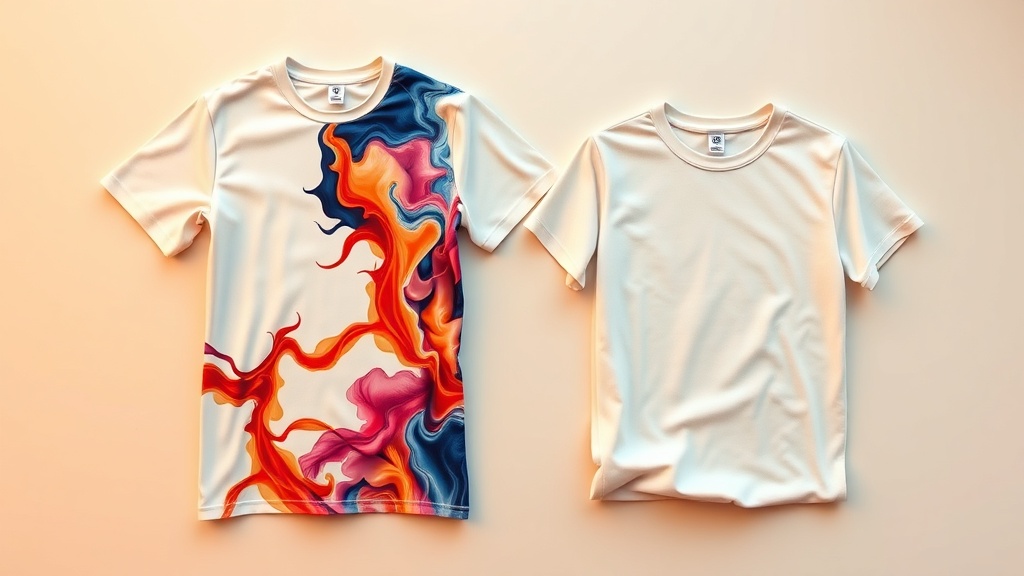
Sublimation is a dye process, not a surface coating. Sublimation ink converts to gas under heat and pressure, then bonds directly with polyester fibers in the fabric. The result is a print that is literally part of the fabric. There is no layer sitting on top. The ink is inside the fibers themselves.
That distinction matters. A full-coverage sublimated athletic jersey feels exactly the same everywhere: printed and unprinted areas are identical to the touch. No peel risk, no edge, no transfer layer. For performance athletic wear where hand feel is a dealbreaker, that's often exactly what the customer needs.
Where Sublimation Has No Equal
White or light polyester garments with all-over continuous prints are sublimation's strongest use case. Full-coverage jerseys, soccer kits, cycling apparel, swim gear. If you need a design that bleeds off every edge of the garment with zero hand feel, sublimation is the correct process and DTF cannot fully replicate it. That is a real limitation worth acknowledging directly.
- All-over continuous patterns that span the entire garment surface
- 100% polyester or high-poly performance fabric
- White or light-colored base (sublimation cannot print white ink)
- Zero hand feel requirement on performance athletic wear
- Applications where the print must survive repeated high-heat drying
Where Sublimation Falls Flat
Dark garments are sublimation's hard wall. The process uses transparent dyes that require a light base to show correct color. On black, navy, or any dark polyester, the fabric color dominates and kills the print. Saturation is gone, colors are muddy. There is no workaround.
Cotton is a non-starter. Sublimation requires polyester fibers to bond with. On 100% cotton, the ink has nothing to adhere to and the print washes out almost immediately. For cotton garments, you need DTF, screen printing, or another surface-applied method.
Small runs with multi-color art are also not sublimation's strength. Sublimation requires custom-cut blanks or printable patterns that match the garment template. A 12-piece order of white poly tees with a chest logo is almost always more economical and faster in DTF.
The Dye Migration Wrinkle
Polyester dye migration is a related issue that trips up decorators new to poly fabrics. When you press a standard DTF transfer onto a red, royal blue, or bright athletic polyester at high heat, the fabric dye can sublimate upward through the adhesive layer and discolor your print. It looks like a soft, washed-out halo around the artwork.
Sublimation sidesteps this because the process bonds dye to the fabric at high temps intentionally. DTF on polyester requires either a poly-blocker transfer or careful temperature management. Knowing the distinction helps you route each job to the right process from the start.
Sublimation vs DTF: Practical Decision Guide
- Sublimation on white poly: wins on hand feel, no surface layer, all-over seamless coverage
- Sublimation on dark fabric: does not work, transparent dyes cannot cover the base color
- Sublimation on cotton: does not work, no polyester fibers to bond with
- DTF on any color cotton: works, full CMYK, durable through 50+ wash cycles
- DTF on dark poly: use poly-blocker transfers to prevent dye migration
- DTF on white poly: works with standard transfers, slight hand feel present
The Honest Verdict
If your customer needs all-over full-coverage prints on white polyester athletic wear and hand feel is a dealbreaker, sublimation is the right answer and DTF cannot fully replicate it. Acknowledge that limitation rather than trying to force DTF into a job it is not built for.
For everything else: dark garments, cotton, CVC, fleece, small runs, multi-color art on mixed-fabric orders, DTF is more versatile, faster to set up, and works without sublimation's fabric constraints. Most decorator shops need both methods in their toolkit. Knowing which job calls for which method is the production skill that saves you from expensive reruns.
Sadie also wrote about