DTF Transfers vs Screen Printing: Which Method Wins?
DTF transfers and screen printing solve different problems. Choose wrong on quantity or art complexity and you'll overpay every time. Here's how to read the job and pick correctly.
How Each Method Works
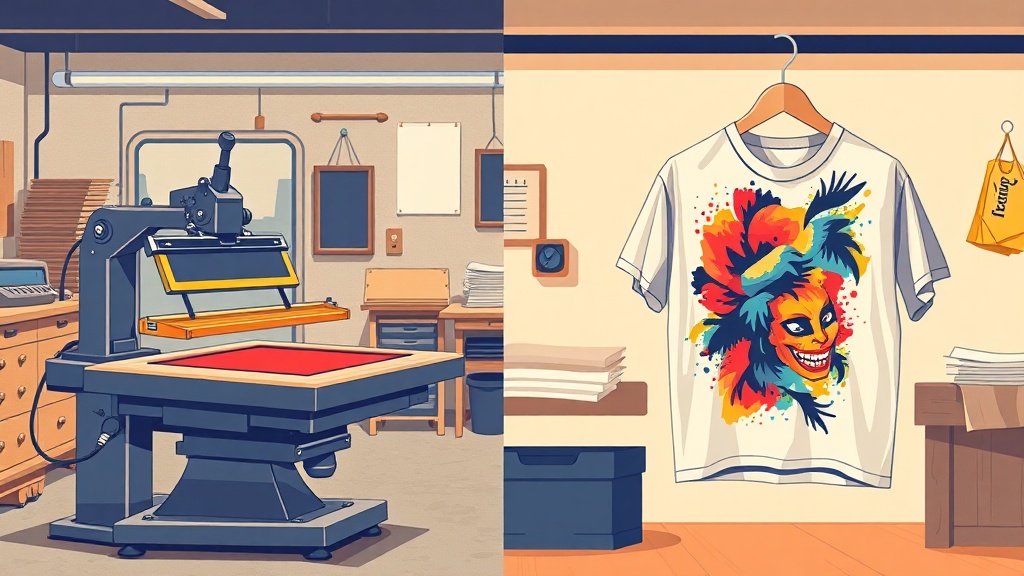
Screen printing pushes ink through a stenciled mesh screen directly onto the garment. Each color in your design requires its own screen, so the setup cost is real and it front-loads every job. Once the screens are burned and the press is running, the per-unit cost drops fast. That's the whole economic argument for screen printing in a single sentence.
DTF (direct-to-film) printing starts digitally. Your artwork is printed onto a PET film sheet, coated with hot-melt adhesive powder, cured, and shipped as a ready-to-press transfer. No screens, no minimum color count, no setup fees. You heat-press the transfer at 300 to 320°F for 10 to 20 seconds and you're done.
The Cost Break-Even: Where the Math Changes
Most decorators get burned here. Screen printing charges setup fees per color, often $20 to $40 each, before a single shirt is printed. A 4-color logo on 24 shirts can cost more in setup alone than the entire DTF order.
The math flips somewhere around 144 units for standard multi-color art. Below that number, DTF almost always wins on total cost. Above 500 units, screen printing's per-piece cost advantage is large enough that setup fees are absorbed and the economics reverse. Between 144 and 500 units, run both quotes. The job-specific variables (color count, ink coverage, screen shop pricing) decide.
- Under 144 units: DTF is typically cheaper once you factor in screen setup fees
- 144 to 500 units: run both quotes, the winner is job-specific
- 500+ units: screen printing usually wins on per-piece cost
- Golden DTF pricing starts at $0.06/sq in and scales to $0.03/sq in at volume
Where DTF Has a Clear Advantage
Complex art is DTF's home turf. Gradients, photorealistic prints, and designs with six or more colors are trivially easy in DTF because the process is digital. Screen printing those same designs requires either expensive color separations or a half-tone simulation that compromises the result.
On-demand and small-batch decoration is another DTF strength. If you're fulfilling individual orders or running a limited drop, screen printing's setup cost is pure overhead with no recovery. DTF lets you order exactly what you need when you need it. Golden DTF ships same-day on orders placed before 1pm ET.
Where Screen Printing Still Wins
Single-color or two-color simple art at high volume is screen printing's strongest use case. A union local needs 2,000 shirts with a one-color chest print. A civic event wants 800 tees with a two-color logo. At those volumes and that art complexity, screen printing is almost certainly cheaper per unit.
Screen ink also sits on the fabric surface in a way some customers specifically want. The vintage, slightly raised look of a heavy ink deposit on soft cotton is a deliberate aesthetic in certain markets. DTF integrates into the fabric differently and won't produce that exact tactile result.
Durability: What Actually Holds Up
Both methods can be durable when applied correctly. Golden DTF transfers are tested to 50+ wash cycles at 40°C on cotton, poly, and blends without cracking or peeling when pressed at the right temp and pressure. Quality screen printing on proper ink and fabric holds up similarly.
The failure modes differ. Screen prints can crack if the ink is applied too thick or the garment is washed hot repeatedly. DTF can peel at edges if press temp was too low or the transfer wasn't fully seated. Neither is inherently fragile. Both require correct application and reasonable wash care from the end customer.
The Practical Decision
Decide on three variables: quantity, art complexity, and timeline. Under 144 units with multi-color or detailed art and a tight turnaround, DTF is the answer. Running 500 or more units with simple art and lead time for screen setup, call a screen shop. When in doubt, price both and let the numbers tell you.