Poly-Blocker DTF: When You Need the Barrier
Dye migration ruins prints on red and dark polyester, and it does not always show up immediately. Poly-blocker DTF is the fix. Here is when to spec it and when you can skip it.
What Dye Migration Is
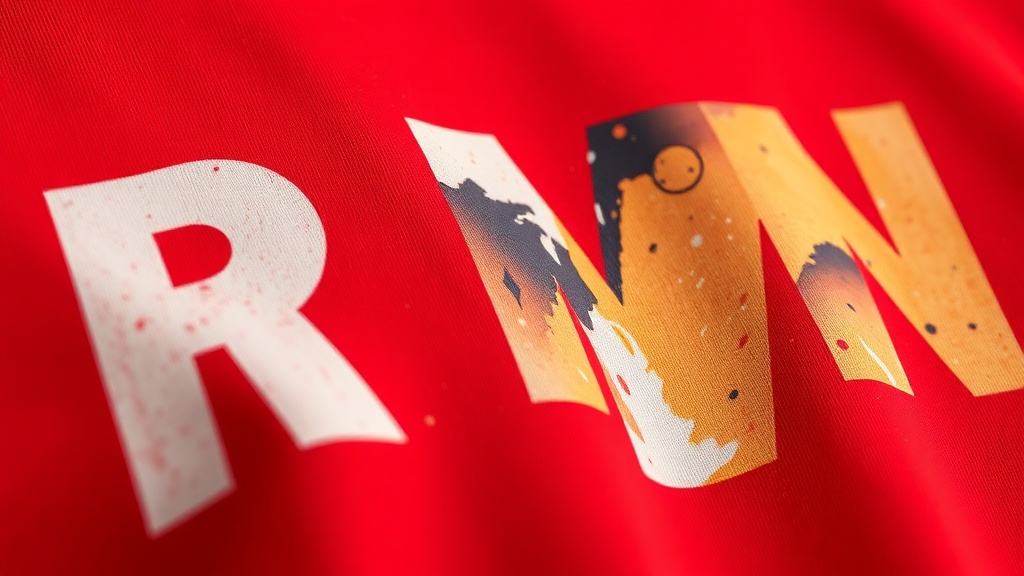
Polyester is colored with reactive dyes that are chemically bonded to the fiber. When heat is applied above roughly 300°F, those dyes reactivate and migrate outward through the adhesive layer of the DTF transfer and into the ink itself. The result is a print that looks pink or gray where it should be white, or has a hazy tint across light ink areas. Migration does not always appear immediately. Sometimes it develops after the first wash, when residual heat from the press finishes driving the dye upward.
Which Garments Trigger Migration
Not all polyester migrates. It depends on the reactive dye concentration in the fiber and the colorway. These are the substrates that consistently cause problems.
- Red performance jerseys (the most aggressive migrators by a significant margin)
- Dark charcoal and black 100% poly athletic fabric
- Royal blue and forest green poly team apparel
- Any 100% poly in a saturated colorway where light ink areas discolor after the first wash
When You Do Not Need Poly-Blocker
Cotton, linen, and rayon do not trigger dye migration. They do not need poly-blocker under any circumstance. Cotton-poly blends below 50% poly typically press at 295 to 300°F without a barrier layer. White and light-colored poly garments have low enough dye concentration that migration is not a practical concern for most decorators.
Tri-blend fabrics (typically 50% poly, 25% cotton, 25% rayon) sit in a middle zone. Migration is possible on dark tri-blend jerseys, especially red or charcoal colorways. For bright white ink areas on dark tri-blend, run a test press and wash before committing to a production run.
What the Poly-Blocker Layer Does
A poly-blocker DTF transfer includes a barrier layer built into the print construction. This layer sits between the garment surface and the ink, physically blocking upward dye migration from reaching the color. The result is the same full-color print you would get on cotton, without any bleed or tint shift. Golden DTF uses USA-made commercial inks with a full CMYK single-pass process; the poly-blocker layer integrates into that production process without changing print appearance or finish.
Press Settings with Poly-Blocker
Poly-blocker transfers press at the same temperature range as standard poly: 285 to 290°F. Do not increase temperature because you added a poly-blocker layer. Higher heat makes dye migration worse, not better. Dwell at 12 to 15 seconds and cold peel. The settings are identical to standard poly transfers. The only difference is the transfer construction itself.