
Choosing the Right Polo for Restaurant Staff
The polo your servers wear all day in a warm dining room is not the same shirt that works at a golf outing. Fabric, fit, and logo placement all change when the shirt is a uniform worn daily.
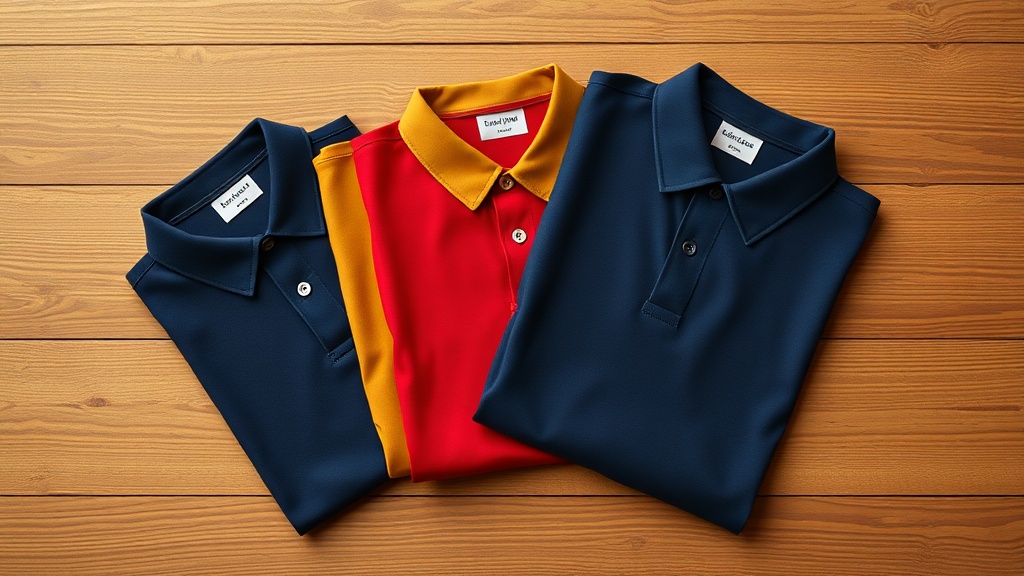
Front of House vs Back of House Needs
Front-of-house staff need a polo that looks sharp through a six-hour dinner shift. That means a shirt that does not show sweat, holds its color through twice-weekly washing, and still looks pressed at the end of a busy Saturday night.
Back-of-house staff and kitchen supervisors who wear a branded polo have different needs: durability over appearance, stain resistance, and the ability to handle hot-water washing. The shirt that looks best is not always the one that survives best.
Fabric: What Actually Works in a Restaurant
A moisture-wicking polyester or poly-cotton blend is the right call for front-of-house. 100 percent cotton looks great for the first few months but pills, fades, and loses its shape faster than a poly blend under commercial wash cycles. Sport-Tek's K500 is a popular choice because it wicks moisture, resists snags, and holds color well.
Avoid anything with a heavy cotton fleece component for service staff. It absorbs heat, traps odors, and takes much longer to dry between shifts. A lightweight woven polo dries overnight and is ready for the next day without ironing.
Logo Placement: Where to Put It
The standard for restaurant uniforms is a left chest logo, positioned about three to four inches from the collar seam, centered on the chest. For most logos, 3 to 4 inches wide hits the right visual weight. Anything larger reads as a print tee rather than a professional uniform.
Some operators add the restaurant name or location as a secondary line below the main logo, especially in multi-location operations. Keep that secondary text at 1 to 1.5 inches tall so it reads clearly without crowding the primary mark.
DTF on a Polo: What to Expect
DTF transfers work on polyester and poly-cotton blend polos. Press time is short, typically 10 to 15 seconds at 300 to 320 degrees Fahrenheit, and the result is a smooth, flexible print that moves with the fabric. USA-made commercial inks hold through 50-plus wash cycles at 40 degrees Celsius.
Tell your staff to wash polo uniforms inside out in cold or warm water and tumble dry on low. The shirt will outlast the print if it goes through a hot commercial wash repeatedly, but under normal home-care conditions the print life matches the garment life.
Sadie also wrote about