
How to Set Up a Restaurant Uniform Program
A uniform program is not a one-time purchase. It is a small ongoing system: par levels, a design file on record, and a reorder process that does not depend on anyone remembering to act.
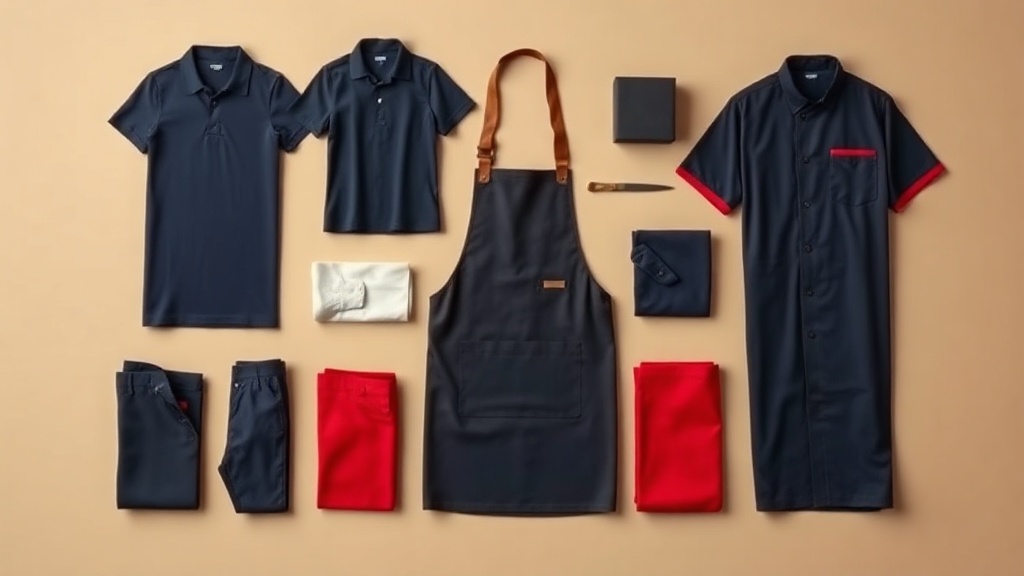
What a Program Is vs a One-Time Purchase
Most restaurants handle uniforms reactively: a new hire starts Monday, someone runs out and buys a polo on Sunday night. That approach is expensive because you never hit volume discounts, and it is slow because same-day retail options are limited.
A program replaces that chaos with a defined system: a standard shirt, a saved design file, an approved blank source, a par level for each size, and a reorder trigger. Once the system is set up, managing uniforms takes 20 minutes a month instead of a crisis every few weeks.
Setting Par Levels
Par level is the minimum on-hand quantity for each size before you reorder. A simple starting point: double your typical staff count per size. If you have four smalls on the floor, keep a par of eight in inventory: four active, four in reserve.
Par levels should account for attrition. In food service, plan for 20 to 25 percent of your inventory to turn over each year from staff departures, damage, and loss. On a 20-person team, that is four to five shirts per year leaving the rotation outside of new hires.
The Design File: Keep It Current
Store your approved logo file in a shared location that does not live only on one person's laptop. A Google Drive folder works. Keep the PNG at 300 DPI with a transparent background and note the approved size in inches. When the GM who manages uniforms leaves, the design file leaves with them if it was not stored centrally.
If you ever rebrand or refresh your logo, update the file and note the date. Knowing which shirts carry the old logo and which carry the new one matters when you are doing a phased rollout.
Onboarding New Hires
Build uniform issuance into your onboarding checklist. On day one, the new hire gets a size measured and checked against inventory. If the size is in stock, they leave with two shirts. If not, a transfer order goes out that day. Orders placed before 1 pm ET ship same day, so a Tuesday hire can have their uniform by Thursday.
Track issued sizes in your HR or onboarding record so you know what to expect back when someone leaves. A simple checkout form, even a paper one, reduces the number of uniforms that walk out the door permanently.
Reorder Triggers
The most reliable reorder trigger is a physical minimum: when any size drops to its par level, a reorder goes out that week. Do not wait until you are out of a size. Running out of medium when a new hire starts on Monday is an avoidable problem.
Batch reorders quarterly if you have a stable team. Consolidating orders to hit volume discount thresholds saves real money. A quarterly order that crosses $250 in transfers saves 22 percent versus four separate small orders at the base rate.
Sadie also wrote about