Why You Should Press DTF Transfers Twice on Hoodies
Double pressing, where you pre-press the hoodie to remove moisture, then press the transfer, dramatically improves adhesion on thick fleece blanks and adds measurable wash durability without changing your temperature or time settings.
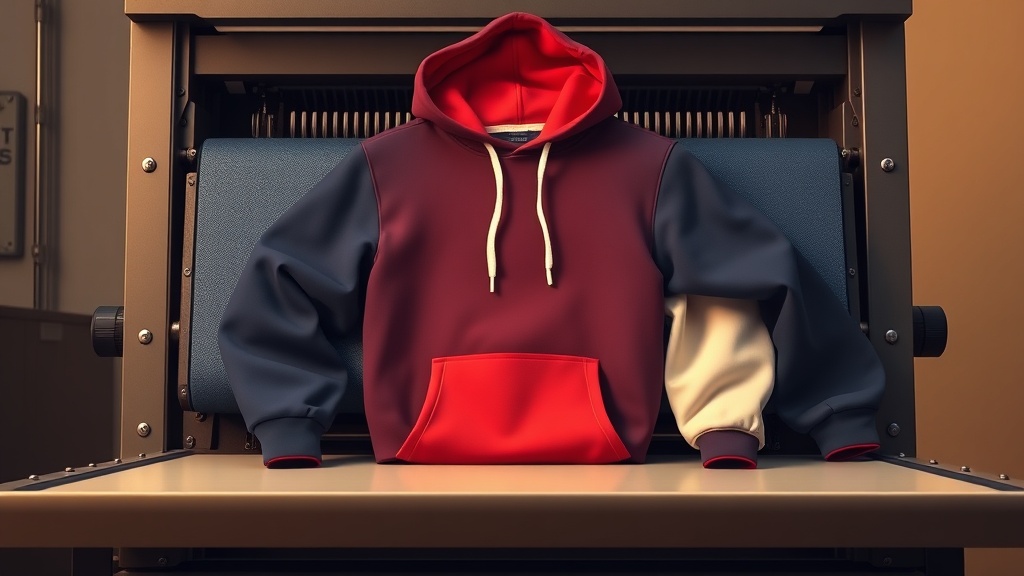
The Problem with Pressing Hoodies Once
Fleece blanks hold moisture in the thick pile layer. When you press a DTF transfer directly onto a hoodie that has been sitting in a bag or on a shelf, that moisture converts to steam under the adhesive layer. Steam pressure creates micro-bubbles in the adhesive bond that are not visible at press time but compromise wash durability.
The thicker the fabric, the more moisture it holds and the more time it takes for that moisture to escape during pressing. On an 8oz fleece hoodie, a standard 15-18 second press does not fully clear the moisture before the adhesive sets. The result is a print that looks fine and fails at 8-12 washes.
The Pre-Press Step
Pre-press the hoodie for 5 seconds with no transfer in place. This drives moisture out of the print area and brings the fabric surface up to temperature before the transfer is applied. The fabric surface is now dry and warm, which means the adhesive activates into a receptive surface rather than a damp one.
The pre-press also flattens the center pocket area on pullover hoodies, which has extra fabric layers that create uneven pressure if not pre-flattened. Position the hoodie so the pocket area is folded behind the print zone before pre-pressing.
The Production Press
After the pre-press, quickly position the transfer and press at your standard fleece settings: 315°F for 18 seconds at medium-firm pressure. The fabric is now at or near press temperature, so the adhesive activates faster and more evenly than it would on a cold, damp blank.
Cold peel after 25 seconds. Fleece retains heat longer than lighter fabrics. Give it the extra 5 seconds before pulling the carrier film. The larger transfer area on a hoodie means more total adhesive to crystallize before you peel.
When Double Pressing Matters Most
Double pressing makes the biggest difference on full-front or full-back hoodie prints with designs above 10 inches wide. The larger the print area, the more surface area where moisture interference can occur. For small chest logos on hoodies, a single press with a 5-second pre-press is typically sufficient.
In high-humidity environments or during summer production, double pressing should be standard practice for all fleece decoration regardless of design size. Humidity is invisible but its effect on adhesion is not.