Embroidery on Hoodies: A Practical Guide
Hoodie embroidery is reliable on the right blanks and consistently frustrating on the wrong ones. This guide covers placement, blank selection, stitch count, and when fauxbroidery is the smarter call.
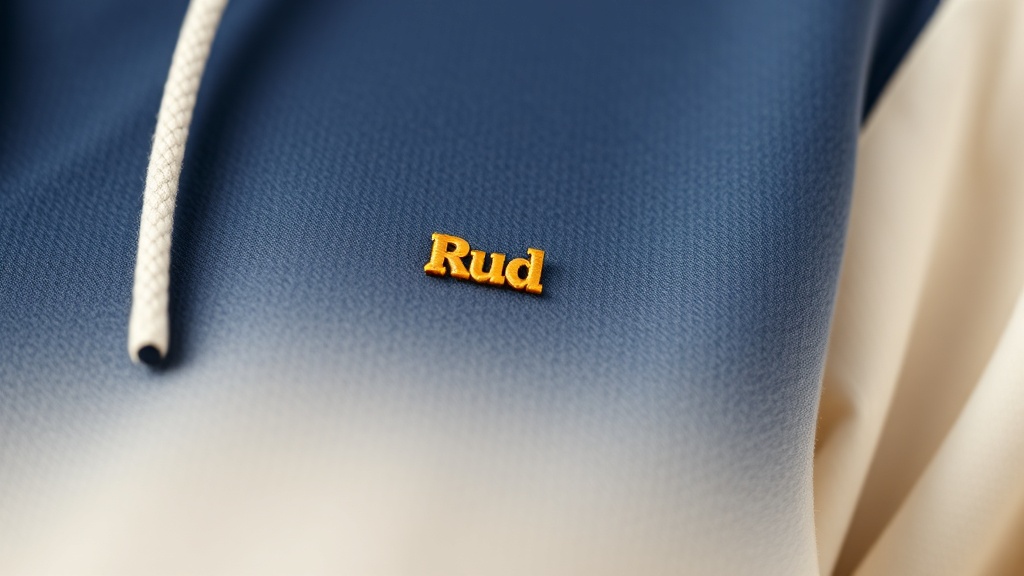
Blank Selection: Fleece Weight Is the Starting Point
Mid-weight fleece at 7 to 8 oz is the standard for hoodie embroidery. Lighter fleece (5 to 6 oz) distorts under hoop tension and the loop side can pull through to the face if backing is insufficient. French terry and waffle knit hoodies are possible but require a skilled operator to hoop without distortion. Heavy blend fleece at 12 oz or more is more stable and tolerates denser fill designs better.
Left Chest vs. Center Chest Placement
Left chest embroidery on hoodies follows the same placement rules as polos: center the design over the left pec, top edge 4 inches below the collar, 3.5 to 4 inches wide. This is the standard for corporate and branded programs.
Center chest on a pullover hoodie works at 5 to 6 inches for a bolder placement. Avoid center chest on hoodies with a kangaroo pocket because the seam causes hoop ring marks and registration problems. Full-zip hoodies are better candidates for center chest than pullovers with pockets.
Sleeve and Hood Placements
Sleeve embroidery on hoodies sits on the upper sleeve, typically 3 to 4 inches wide, 1 inch below the seam cap. Hood embroidery on the hood itself requires detaching, hooping, and re-attaching, which is not practical on most production blanks. If a customer requests hood embroidery, evaluate whether a fauxbroidery or DTF transfer pressed with a flat iron or cap press is more realistic for that location.
Backing and Hooping
Use cutaway backing, not tearaway, on fleece. Tearaway leaves rough edges under the embroidery that can itch through thin fleece and fails to support the stitches long-term. A medium-weight cutaway supports the design without adding significant stiffness. For very thick hoodies, two layers of cutaway backing provides the stability that dense fill designs need.
When Fauxbroidery Outperforms Traditional Embroidery
Photorealistic artwork, complex gradients, and high stitch count designs (15,000 or more stitches) are candidates for fauxbroidery on hoodies. A fauxbroidery transfer pressed at 315°F for 15 seconds onto cotton fleece bonds cleanly and delivers the raised puff texture without the per-stitch cost. For production runs with complex multi-color logos where the customer wants a dimensional look without the embroidery price, quoting fauxbroidery alongside traditional embroidery gives them a real choice.
Sadie also wrote about
Fauxbroidery Application Guide
Specialty transfer notes: what it is, when to use it.
Cotton Fleece Guide
Fabric-specific press notes for reliable DTF prints.
Press Temperature Guide
Press settings and heat-press setup notes.
Embroidery vs Fauxbroidery Polos
Specialty transfer notes: what it is, when to use it.