Embroidery vs. Fauxbroidery on Polos: Cost Compared
Traditional embroidery and fauxbroidery both deliver a textured, dimensional logo on a polo. The right choice depends on your design complexity, quantity, and what the total cost per piece actually looks like.
What Fauxbroidery Actually Is
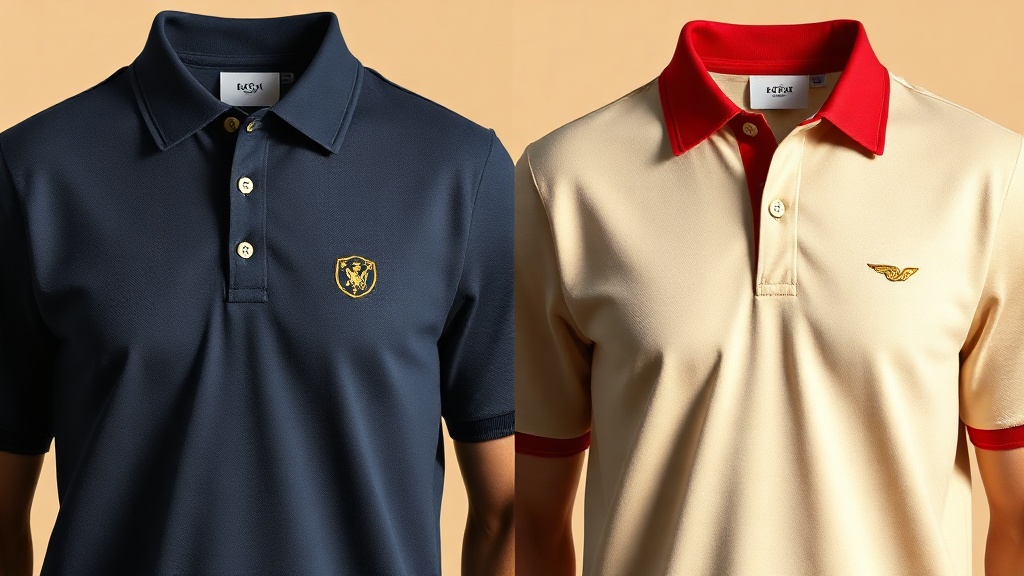
Fauxbroidery is a raised, puff-style DTF transfer that simulates the dimensional look of embroidery without a single thread. It is printed with specialty inks that produce a textured, raised surface when heat-pressed onto fabric. On a polo, it looks like a structured embroidered logo from any normal viewing distance. The texture is tactile and measurable, not a printed illusion.
Where Traditional Embroidery Wins
High-stitch-count, dense fills on thick fabric substrates are where traditional embroidery is most durable. Workwear polos, outerwear, and anything that will take industrial washing at high temperatures benefits from thread-based embroidery that is literally woven into the fabric.
Also, if your customer specifically requires machine embroidery for brand compliance, certification, or industry standard reasons, that is embroidery. There is no substitute that satisfies a written specification requiring it.
Where Fauxbroidery Wins
Design complexity is where fauxbroidery separates itself clearly. A 10-color gradient logo on a polo requires either significant simplification for embroidery or a digitizing investment of $50 to $150 plus stitch-count-based pricing per piece. The same design prints as a fauxbroidery transfer at the base rate of $0.06 per square inch, scaling down to $0.03 at volume.
Production speed is also different. A fauxbroidery transfer presses in 15 seconds. Machine embroidery on a left chest logo runs 2 to 4 minutes per piece. For a 144-piece polo run, that difference in press time is a half-day of production.
Quality Side by Side
On a pique knit polo, a properly pressed fauxbroidery transfer holds its texture through 50 wash cycles at 40°C. Traditional embroidery will outlast that, but for most corporate programs that refresh uniforms annually or bi-annually, both options perform well within the garment's service life. The end customer rarely notices a quality difference at normal viewing distance.
How to Quote Both
For a simple 1 to 3-color logo under 3 inches with no fine detail, embroidery is likely competitive. For logos with more than 4 colors, gradients, photography, or fine detail below 1/4 inch: quote fauxbroidery and let the customer see a sample alongside a pressed embroidery sample. Most buyers choose fauxbroidery when they see both options at the same time and compare the price.
Sadie also wrote about
Embroidery On Polos
Specialty transfer notes: what it is, when to use it.
Fauxbroidery Application Guide
Specialty transfer notes: what it is, when to use it.
Pricing Fauxbroidery
Specialty transfer notes: what it is, when to use it.
Fauxbroidery vs Embroidery Corporate
Specialty transfer notes: what it is, when to use it.