
Setting Up Your Heat Press Workstation
A poorly arranged heat press workstation creates burns, back strain, and slow throughput, and most problems trace back to table height and surface layout rather than the press itself.
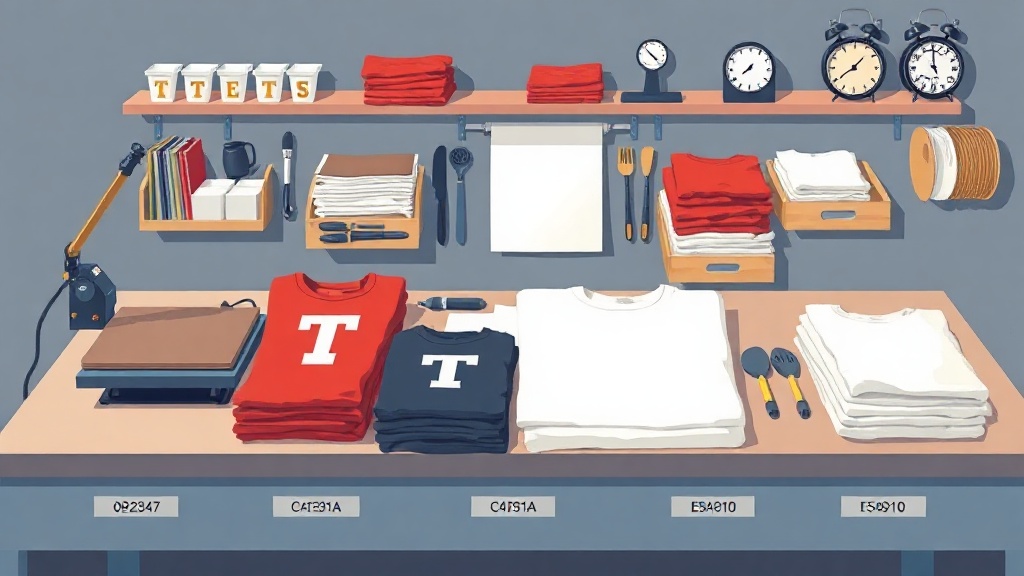
Table Height and Ergonomics
Your heat press should sit at a height where you can operate the handle and position garments without bending your back. For most adults, this is a work surface between 34 and 38 inches tall, slightly higher than a standard kitchen counter. A press that forces you to hunch forward will cause fatigue within an hour of production work.
Swing-away presses need clearance on the side where the upper platen travels. Leave at least 18 inches of clear space to the right or left of the press, depending on which direction it swings. Blocking that swing with a wall or supply shelf slows every press cycle and creates a burn risk.
Surface Layout for Throughput
Position your undecorated blank stack to the non-swing side of the press, within arm's reach. Position your finished garment bin on the opposite side. The production flow should be: pick blank, pre-press, position transfer, press, peel, inspect, stack. Each step flows left to right or right to left without backtracking.
Keep your transfer stack flat and accessible within 12 inches of the press. Reaching across the press for a transfer wastes seconds on every piece. At 50 pieces per hour, three seconds per piece is 2.5 minutes of dead time per production run.
Power and Heat Management
Most 15x15 presses draw 1500-1800 watts. Run them on a dedicated 15-amp circuit. Sharing a circuit with a computer, monitor, or other equipment can cause voltage drops that affect temperature consistency, especially during warm-up cycles.
Heat radiates off the press constantly during production. Keep the workstation ventilated. Do not press in an enclosed closet or small room without airflow. In summer, a small fan pointed away from the press improves comfort and keeps your hands cooler when positioning garments.
Essential Accessories
A Teflon cover sheet or silicone release sheet protects both the garment and the upper platen from adhesive residue. Keep several on hand and replace them when they show buildup. A contaminated cover sheet transfers residue to your next garment.
A press thermometer is not optional. A garment alignment board or center ruler saves time on every piece. A small silicone mat next to the press gives you a safe surface for hot garments during the cold peel wait. These three items together cost under $40 and improve every press cycle you run.