
Running a School Spirit Wear Fundraiser
A spirit wear fundraiser works when the shirt is something students actually want to wear, the price is set correctly, and the pre-order model eliminates the risk of buying shirts nobody wants.
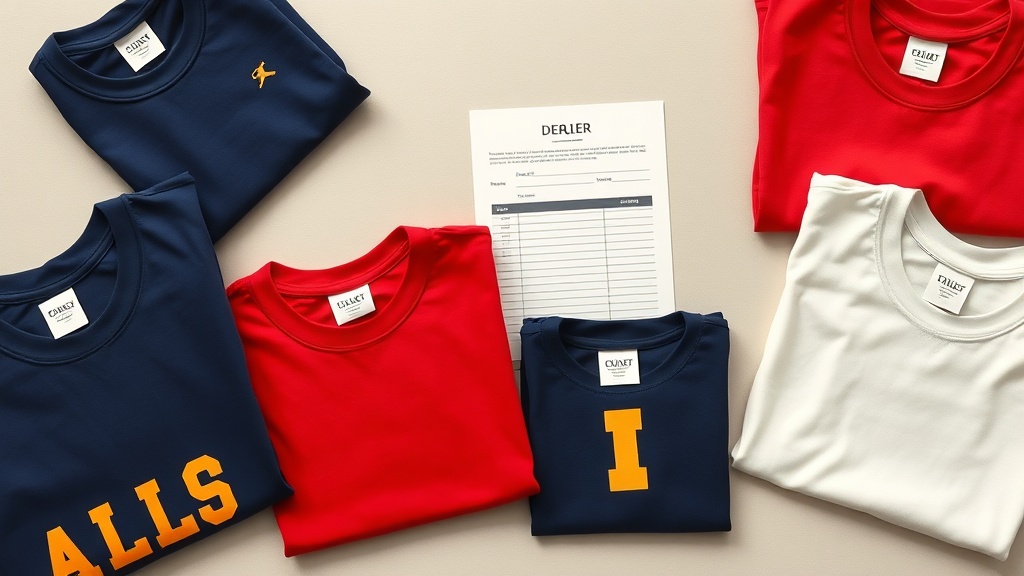
Pre-Order vs In-Stock: Which Model to Use
The pre-order model is almost always the right call for a first-time spirit wear fundraiser. You collect orders and money up front, place the transfer order only for the exact count received, and have zero unsold inventory risk. The downside is you need two to three weeks from launch to delivery, which requires planning.
In-stock works if you have run the fundraiser before and have reliable data on how many shirts you will sell. Holding extra inventory to sell at games or events is only smart if your sales history supports it. First-time fundraisers should pre-order.
Setting the Right Price
A spirit tee with a full front DTF design on a Comfort Colors 1717 costs roughly $14 to $17 all-in: $9 to $12 for the blank and $3 to $6 for the transfer depending on order size and design dimensions. Price it at $25 to $30 retail and you raise $8 to $16 per shirt.
A hoodie costs more but raises more margin per unit. A blank fleece hoodie runs $18 to $25, decoration adds $4 to $8, and you can price a hoodie at $40 to $50 retail. On a 60-piece order, a hoodie fundraiser can outperform a tee fundraiser by $300 to $600 in net proceeds.
Using a Gang Sheet to Cut Decoration Cost
If your design has a front chest and a back graphic, build a gang sheet for each. Tiling all 60 front chest copies on one sheet and all 60 back copies on another reduces your cost per print compared to ordering individual transfers.
At a $150 order total, you save 17 percent. At $250, you save 22 percent. On a 60-shirt fundraiser with a front-and-back design, you will almost certainly cross $250 in transfers, making the volume discount automatic.
Collecting Orders and Money
A Google Form with a payment link attached is the simplest system that does not require a platform fee. Set a hard close date on the form, communicate it clearly to parents, and do not extend it. Late additions cost you because they may push a single-transfer order outside the volume threshold you already calculated.
If you use a school fundraiser platform that takes a percentage, factor that into your price. A platform taking 10 percent on a $25 shirt costs you $2.50, which is meaningful on a thin margin product. Know your net before you launch.
When the Order Comes In Short
If pre-orders come in at 35 instead of the 60 you planned for, recalculate your cost at the new volume before placing the order. You may fall below a discount threshold. Decide whether to hold the launch open a few more days, pad the order with a small buffer of popular sizes, or accept the lower discount and maintain your close date.
Padding by 5 to 10 percent in your two most popular sizes is usually the right call. You will sell them at the next game or event, and you maintain the volume discount that makes the fundraiser profitable.
Sadie also wrote about
Gang Sheet Pricing
How to plan, size, and price gang sheets for max yield.
Fundraiser Math Non Profit
Operational playbook for shops, teams, and organizations.
School Spirit DTF
Operational playbook for shops, teams, and organizations.
Gang Sheet Math
How to plan, size, and price gang sheets for max yield.